Model Progress Needs Translation
This week's useful signal was that model releases do not become business value as announcements. They become value only when an operator turns capability claims into workflow, budget, interface, and verification decisions.
Listen on Spotify
Compact audio version from The Berserki Brief.
Open in Spotify ↗TL;DR
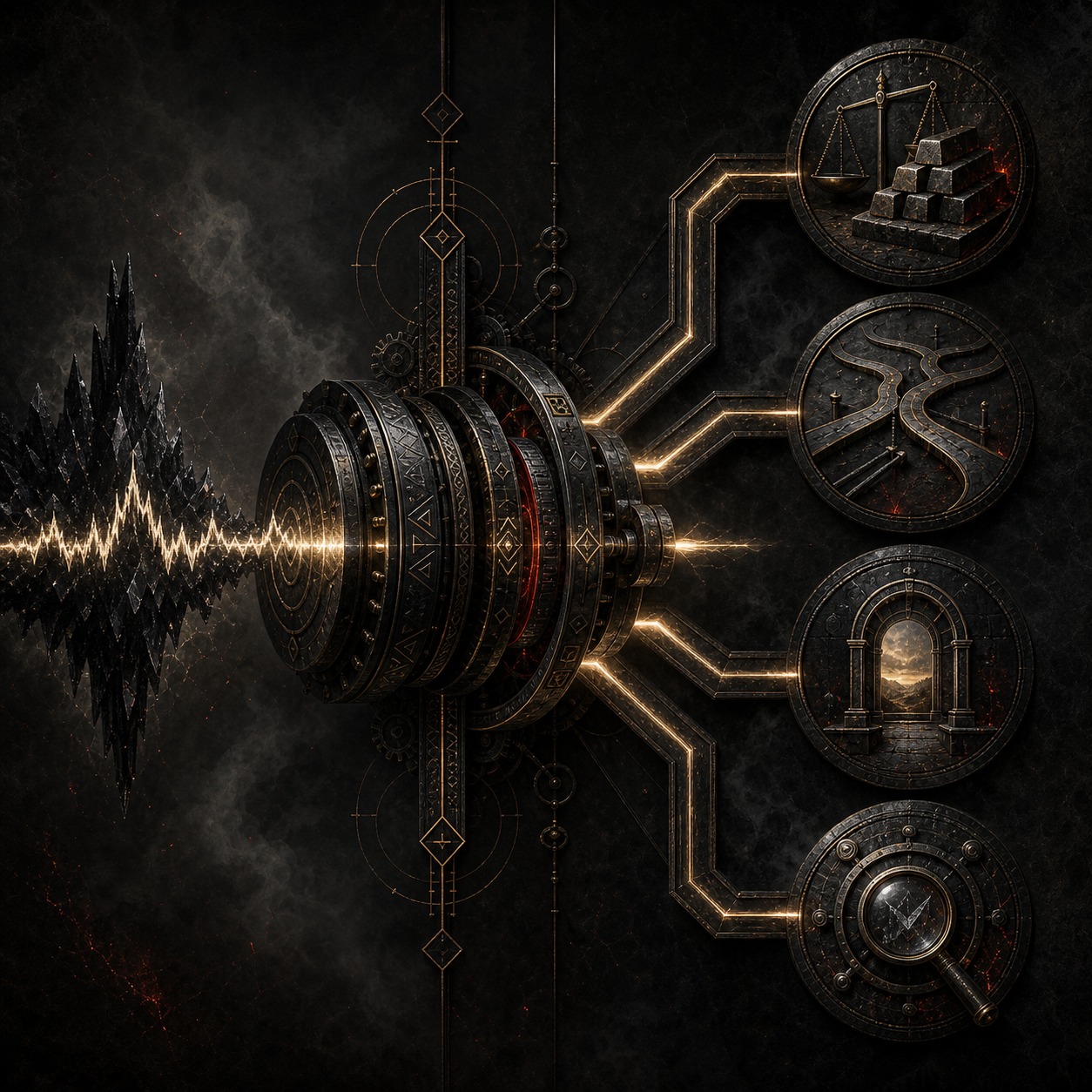
A model release is not a business decision. It becomes value only when an operator translates the capability claim into one of four outcomes: no change, a routing change, a product change, or a verification change. Until a claim survives contact with real work, it stays context, not direction.
The lesson this week
A model update is only useful when it changes the shape of the work around it.
The thesis for Berserki this week: model progress becomes company value only after an operator translates it into a workflow change, a budget rule, an interface decision, or a verification gate.
That sounds like a small distinction, but it changes how we should read AI news. The release is not the decision. The benchmark is not the decision. A cheaper or stronger model is not the decision. The decision is what the company changes after the claim survives contact with its own work.
For an AI-first company, this is the difference between following the market and operating through it. The market produces capability claims every week. Some are real. Some are early. Some are useful only inside a narrow task. The operator job is to turn them into a yes/no/maybe rule: route this task differently, cap this spend, change this review gate, expose this interface, or do nothing yet.
This week's corpus was useful because it did not point to one clean winner. It pointed to a translation problem.
What the corpus showed
One Useful Thing framed the shift from working with chatbots toward systems that are sometimes better than humans and sometimes worse. The important operating point is not that AI can help write, review, or build. It is that the boundary keeps moving. A tool can be valuable in one part of the work and weak in another, so the workflow has to keep renegotiating where judgment sits.
That is a translation job. If a model is stronger at review, the interface may need to show evidence earlier. If it is stronger at a narrow build task, the budget and verification gate may move closer to that task. If it is weaker at long-form taste or customer context, the right answer is not more generated output. It is a clearer human decision point.
Simon Willison's note on Microsoft's MAI models carried a different version of the same lesson. Initial model claims can be interesting and still need patient checking before they become decisions. Parameter counts, data claims, licensing statements, and benchmark comparisons are not product strategy on their own. They are inputs. Until someone checks what the claim means for cost, availability, risk, and use case fit, it should not change the workflow.
Latent Space's AINews record adds the infrastructure side. The week's signal was full of agent reliability work, long-horizon benchmarks, cost attribution, budget controls, and harnesses for observability. That is the market building translation tools around capability. It is less glamorous than a release headline, but more useful for operators: success rate, retries, failure modes, cost per successful run, and whether a model should be used at all.
Sources behind this note: One Useful Thing, "Co-Existence and the End of Co-Intelligence" - https://www.oneusefulthing.org/p/co-existence-and-the-end-of-co-intelligence. Simon Willison's Weblog, "Microsoft's new MAI models" - https://simonwillison.net/2026/Jun/2/microsofts-new-models/#atom-everything. Latent Space, "[AINews] not much happened today" - https://www.latent.space/p/ainews-not-much-happened-today-6b8.
What we test next
For Berserki, the practical rule is to stop treating model progress as a general upgrade. Treat it as a set of proposed diffs.
A model claim should create one of four outcomes.
First: no change. The claim may be interesting, but not relevant enough to alter a live workflow.
Second: a routing change. A task moves to a different model or tool because the evidence says the result is better, cheaper, or easier to verify.
Third: a product change. The interface starts asking for different input, showing different evidence, or hiding output that used to create review debt.
Fourth: a verification change. The gate gets stricter, faster, or closer to the task because the model's behavior changed the risk profile.
This matters most in Fundinn because the public value is not "AI was used." The value is that a local business owner gets a clearer answer about visibility, source confidence, and the next action. If a new model improves that answer, use it. If it only makes the system feel more advanced internally, ignore it.
It matters for Toolhalla because model and tool releases have to become buyer judgment. A directory that repeats launch claims is not enough. The useful surface says where a tool fits, what evidence exists, what failure mode to watch, and what budget or workflow assumption the buyer should test.
It matters for Berserki itself because public field notes should not become a mirror of the release cycle. They should show what changed in operating judgment. Some weeks that means a product adjustment. Some weeks it means rejecting a tempting claim because it has not earned a place in the work.
The next test is small and concrete: by 2026-06-16, take one new model capability claim, compare it against one live Fundinn workflow, and decide whether routing, review, budget, or interface should change. If none of those change, the claim stays in the corpus as context, not as operating direction.
By 2026-06-16, compare one new model capability claim against one live Fundinn workflow and decide whether routing, review, budget, or interface should change.